Spring in Japan
Posted on May 29, 2011 2 Comments
In Chicago, my favorite time of year was probably Fall, a season I always associated with bright colors on trees and new beginnings. I always looked forward to the new school year and often thought about goals and the person I wanted to become at the end of the school term.
Now that I am no longer in school and live in Japan, my favorite season is Spring (春). It has been a challenging and tough few months for everyone in Japan, so the blue skies and sakura (cherry blossoms) of Spring have been a welcome sight. Like all the seasons in Japan, Spring is welcomed with festivals, parties and an appreciation for life.
On a personal note, these past few months have been busy and in some ways I feel like I have become a new person. I have been in Japan for almost one year, and I feel like I have experienced and felt so much in such a short period of time. This Spring, I started a new term with new students, competed in my first 5K and have been helping promote a local Charity Show JET members in Toyama are performing in July. Here are some of my favorite iPhone pictures of Spring. The rainy season is about to begin, so I won’t be seeing too many blue skies in the next few weeks.
春を大好き。

Cherry blossoms in Kojo Park, Takaoka, Japan
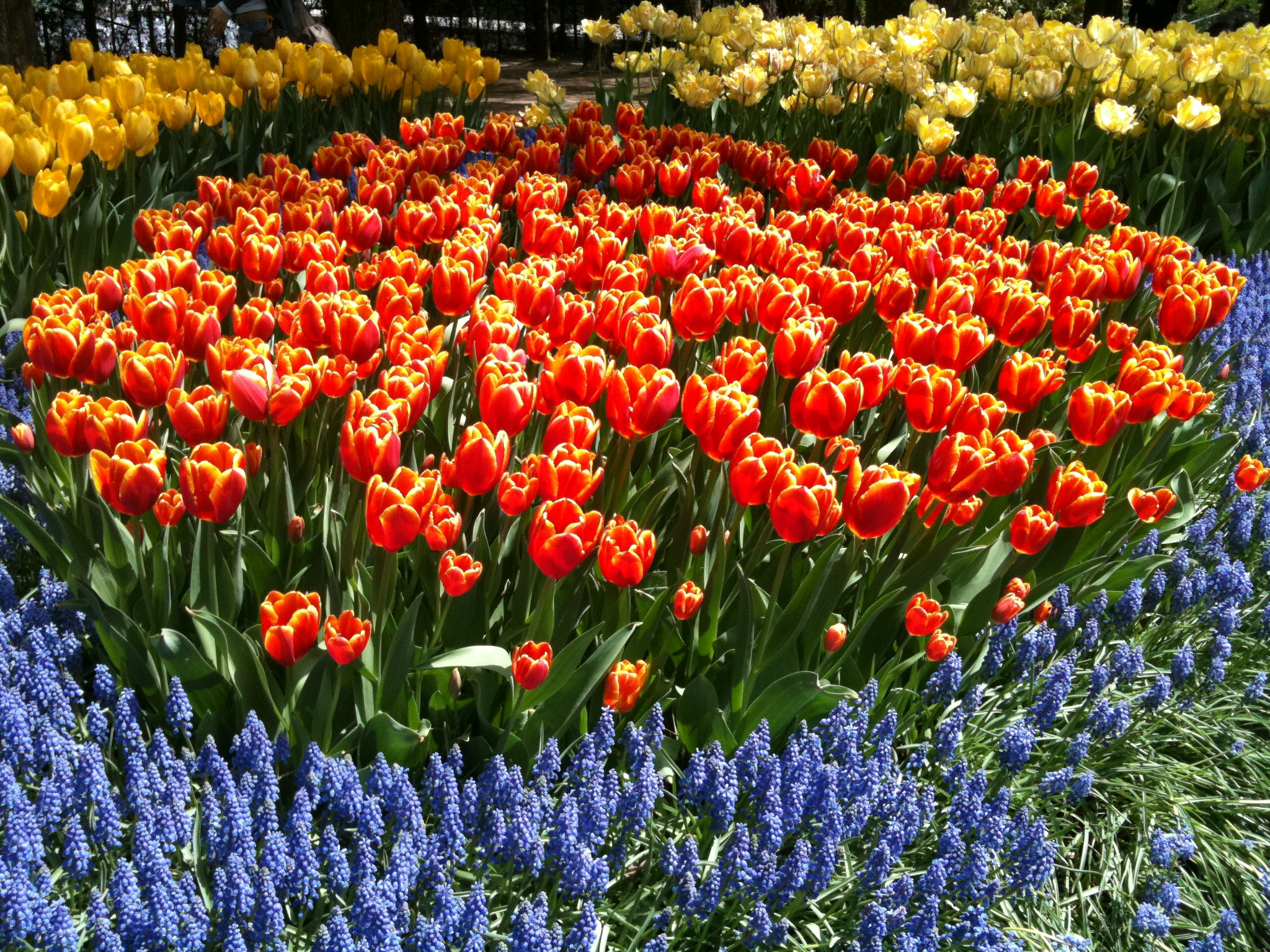
Tulips in Tonami, Japan

Hotaruika (firefly squid) in Namerikawa, Japan
The Tateyama Mountain Range From Above
Posted on April 8, 2011 Leave a Comment
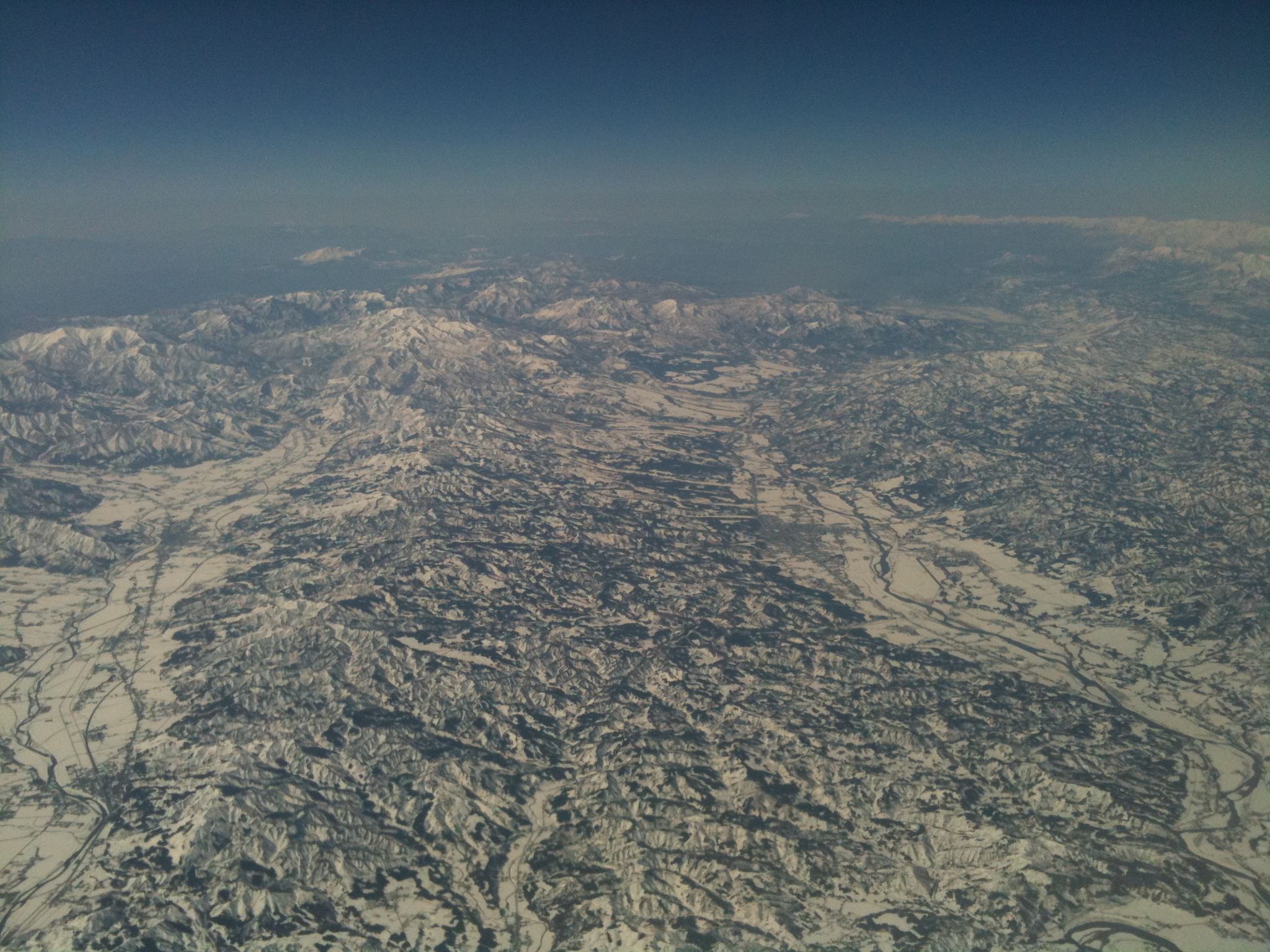
The Tateyama Mountain range from above
I flew to Seoul, South Korea last week. This is an image of the soaring Tateyama Mountain range from mid-air.
Train Stories #1: The Man from Chiba
Posted on March 31, 2011 4 Comments

I have met dozens of interesting people on train rides around the world. On a train ride to Howth, a seaside town northeast of Dublin, an American couple told me I was crazy for moving to the Emerald Isle alone. I laughed and clutched my copy of Nuala O’Faolain’s My Dream of You and told them about a few pubs they should visit.
On an overnight train ride from Sarajevo to Budapest, I was accompanied in my cart by a young man from Boston. We talked a bit about travels and plans for the future. He worked in a Boston bar but hoped to travel a good deal more. As it got late into the night, he moved to a sleeping area nearby. “Just scream if you need help,” he said before he left.
“Hah, thanks,” I said nervously, hoping no one would bother me and I wouldn’t have to scream. I made it back to Dublin just fine.
In Japan last year, on Christmas Eve, I met a woman in her 60s from Osaka who was traveling to Toyama for a funeral. She asked that I read her English essay on the tea ceremony and told me to call her when I visit Osaka.
I will most likely never see these people again, but they still made an impression on me, so I would like to keep track of these stories starting now. An encounter on Monday reminded me that there’s a story in every train conversation.
Every Monday, I travel to Uozu for my Japanese lesson, normally talking to very few people on my way to and from the Uozu City Hall. After my lesson this week, I walked to the platform, put in my iPod earplugs and waited for the train. It was a fairly nice evening, and I was feeling a little better than I had these past few weeks, so I wanted to listen to music with a different beat. I put on Lupe Fiasco’s “Hip Hop Saved My Life.” In between the pulsing rhythm of the song, a Japanese man probably in his early 30s came up to me. He seemed stunned to see a foreigner in Toyama (there are some of us, but not many).
“Is this your first time here?” he asked.
He wore thick glasses, had a slight overbite and a friendly smile.
“I live in Japan,” I replied. “I came here in July. I live in Namerikawa. Where are you from?”
“I am from Chiba,” he said. “But I am back in Toyama to visit my family. I was in Tohoku for the earthquake.”
My eyes widened.
“But I was in the prefecture that was least affected, Yamagata-ken. The earthquake was maybe a 6 or 7 there. But we were without power for several days and there are still blackouts.”
Yamagata-ken, in the western Tohoku region, was one of my random placement choices on my JET application and I count myself very lucky that I was not placed there.
He continued, “I want to go back there and help, but I think they need specialists now.”
I nodded just as the train came. We walked to a seat together.
“So what do you do?” I asked.
“I am a math teacher in Chiba, but I used to work in IT.”
We talked a bit more about life in Toyama and the fresh seafood. He told me that he loves Toyama, but he thinks more needs to be done with the industry here.
I was unsure of what he meant. “What do you mean?”
“For example, the students are smart here, maybe smarter than other prefectures, but there’s not a lot of opportunity for them here.”
I nodded and said I understood. The train came to Namerikawa, so I stood up to get off the train. I told him it was nice chatting with him.
“Goodbye,” he said. “I hope to see you again sometime.”
He waved from the window as I walked to the platform stairs.
Namerikawa Gives a Helping Hand
Posted on March 24, 2011 1 Comment

Volunteers in Namerikawa help with earthquake relief efforts
I grew up just outside of Chicago, the third largest city in America, so life in a small Japanese town is very different from anything I am accustomed to. Although the tiny south suburb I was raised in often felt like a small town to me, the sense of community that is fostered in Namerikawa feels different compared to anything else I have experienced.
I was reminded of this on Friday after work, when I stopped by the theatre building just outside of the Namerikawa City Hall to donate some towels, blankets and other essentials to help the victims of the Tohoku earthquake and tsunami. Officials estimate that more than 300,000 people are now homeless and living in shelters as a result of the damage. The need for donations and supplies is still great.
Namerikawa is a tiny seaside town on the other side of Honshu, more than 180 miles from Fukushima, yet the theater room was packed with donations, including both used and new items. Outside, volunteers were loading supplies in large vans. Inside, even more volunteers were spending their Friday evening sorting the donations, packing up boxes and ensuring that our neighbors to the northeast would be cared for.
When I first entered the area to drop off my items and help out, I ran into an acquaintance from City Hall. “Oh, Sheila-san, hi,” he said. He was standing on a chair taking pictures for the City Hall’s newsletter. He pointed to all the volunteers. “すごい,” (sugoi) he said, which roughly translates to “This is amazing.”
I nodded in agreement, proud that my Japanese town was banding together to help those who need it most.
The Grateful Crane
Posted on March 23, 2011 1 Comment
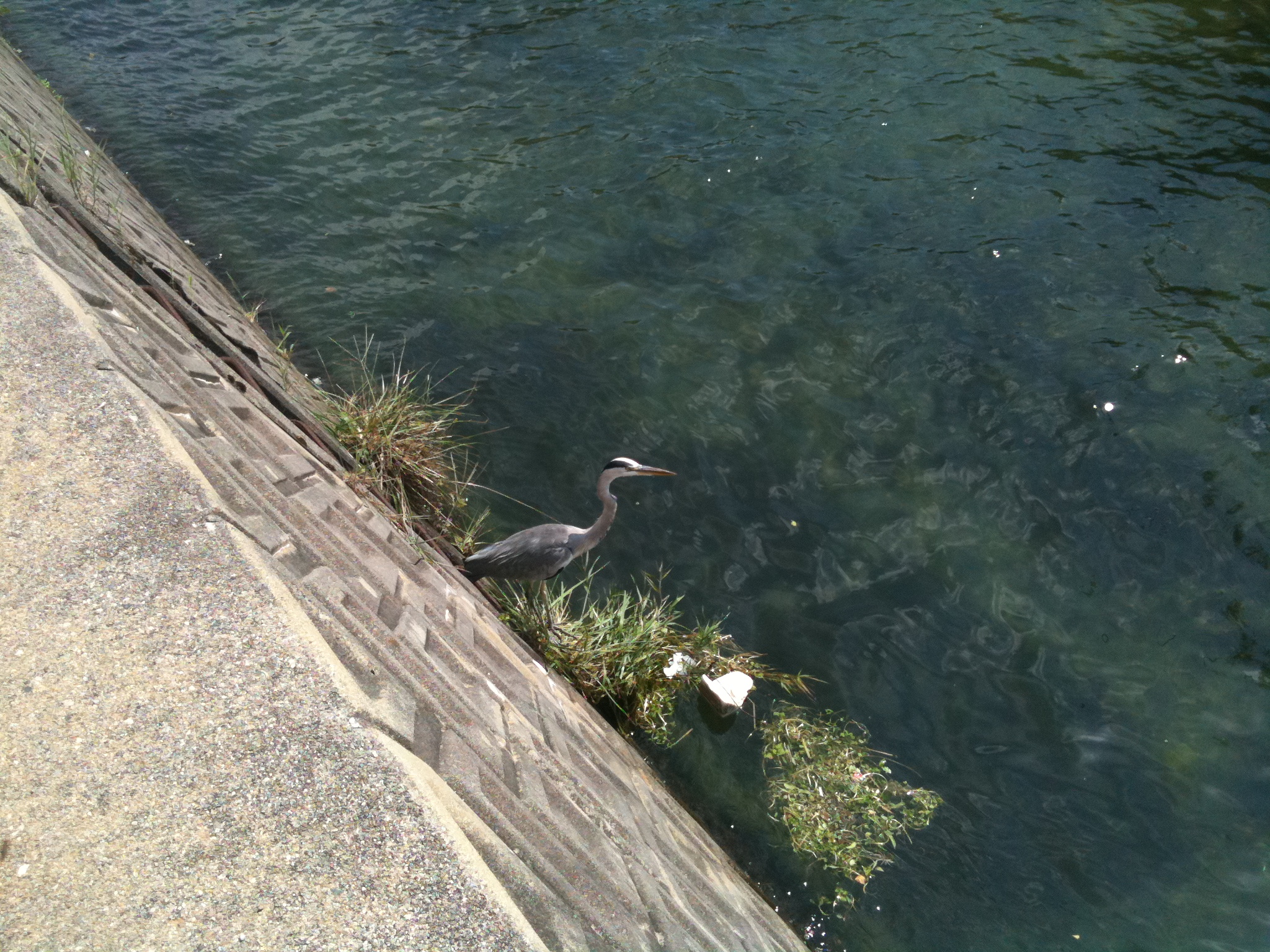
A crane rests in Namerikawa, Japan
As I study more Japanese, I am trying to read old Japanese folk tales for children. Although English stories such as Peter Rabbit are popular here, so are several famous Japanese stories that I had never heard of prior to coming to Japan. The first story I picked up was 鶴の恩返し (tsuru no ongaeshi), which roughly translates to “The Crane’s Return of Favor”, or “The Grateful Crane.” It is about a poor field worker who helps an injured crane. Soon after, a mysterious woman enters his life and brings him wealth. My wonderful co-worker Miki-san helped me translate the text as I read the book. Read Miki-san’s translation below.
I find Japanese folklore very interesting because the stories don’t necessarily end happily. Most often, elements of Buddhism and the Shinto religion play an important role in the tales, as does nature and altruism. If you want to read more translations, I stumbled upon this Website, which has an English text for several popular Japanese tales.
The Crane’s Return of Favor
Once upon a time, there was a young man. He worked very hard in the field. But he was poor. One day, he found an injured crane. “Oh, what a sad thing!,” he said. He felt very sorry for the crane, so he decided to take care of it. He nursed the injured crane back to health, and it flew away.
One day in the night, a very beautiful young woman visited his house. “May I please stay here?” she asked. The young man was very surprised, but he said yes. They lived together and were very happy. One night, she said to him, “I am going in this room to work. Don’t open the door completely. Please don’t watch me.” He said OK and went to bed.
The next morning, she gave him a very beautiful cloth. “Please, sell this cloth,” she said. He sold it in town for a lot of money. At the market, everyone said, “How beautiful!” The young man started to become very rich. Every night, the young woman would return to the room, and every time, she would tell him “Don’t watch me!” She became very slender, so one night, the young man went to check on her. He opened the door and gasped. There was a crane weaving its own feathers.
“Oh my gosh! You look completely different!” he said. “Sorry! Sorry!”
The crane replied, “I was the crane that you helped. I came to your house to repay you for your kindness. But you know the truth now, so we cannot live together anymore.”
The next morning, the crane flew away. And she never came back.
 Sheila Burt