Train Stories #4: The Woman with the Flowing Skirt
Posted on January 8, 2012 2 Comments
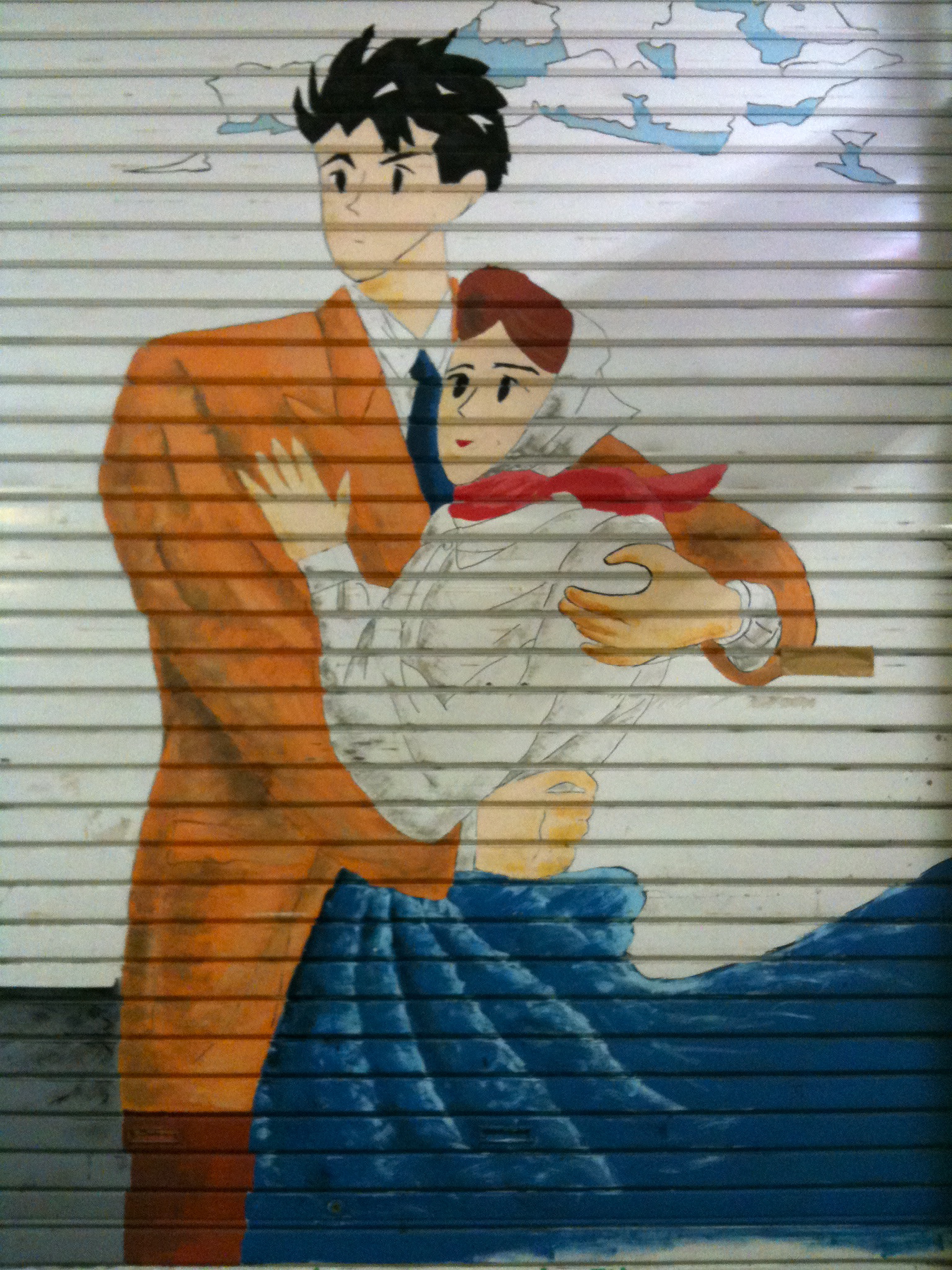
The Woman with the Flowing Skirt in Nakanamerikawa Station, Japan
Japanese train stations are some of the most modern and efficient places I have ever seen, but here in the countryside, life moves at a slower pace. Our trains are still generally on time and used by the masses for work and leisure, but many inaka train stations here are rustic and barren, minus the waiting seats and vending machines.
But at these desolate places, I see stories.
Inside Nakanamerikawa station (中滑川駅), part of Toyama’s Dentetsu line, there is a wall mural that always catches my eye when I walk past it. In the mural, a young couple embrace. They look more Western to me than Japanese, but they could easily pass for two characters in a manga. The slender woman is clasping onto the man’s broad chest like her life depends on it. Her blue skirt is flowing so that it looks like an ocean wave. The man, wearing a tailored brown coat and slacks, looks ahead as if he is about to leave her to serve in a war. Duty beckons, he thinks, and he must protect his woman and his country.
I don’t know the facts or history behind this mural, but I am drawn to it nonetheless.
A few feet away from the mural, there is an elderly woman who works at a sweets shop frequented by students. She sells fresh crepes and ice cream in a rundown train station. She is the only worker I have seen at the shop. Except for the junior high school and high school students who buy sweets and giggle on the nearby bench, her only company is spiders and Winnie the Pooh dolls. She is no more than 4 feet 11 inches tall and looks about 85~87 years old. She stands with a slight hunch, always wearing a checkered apron and bowing or smiling when I walk past her.
To me, she is the woman in the mural.
She is smiling, and waiting. Waiting for her husband to return, and waiting for the days when she does not feel so alone.
Sidenote: This is my 100th post! Thank you to anyone who has ever read any of my entries, commented or simply inspired me to write.
Welcome, 2012!
Posted on January 2, 2012 1 Comment
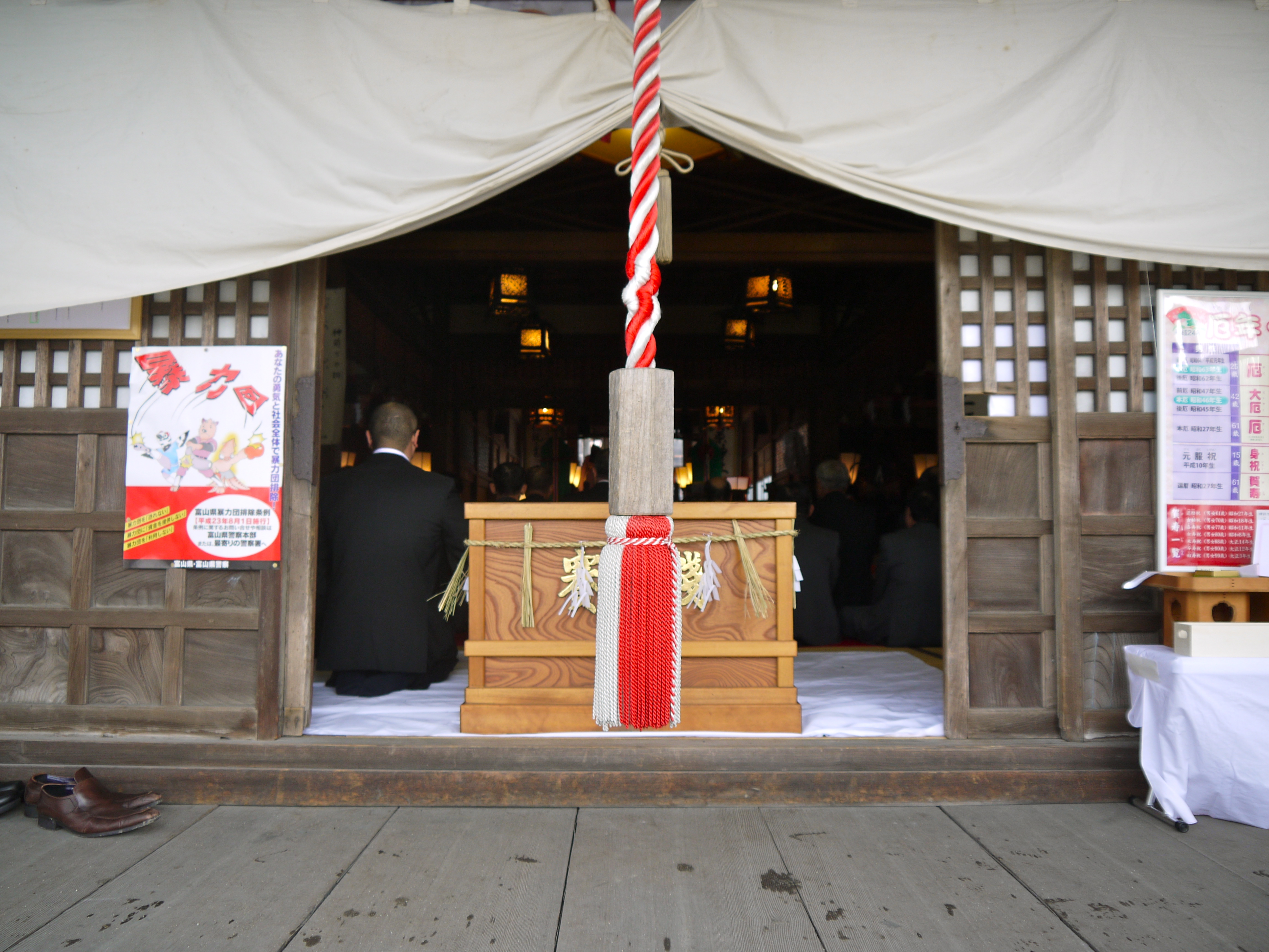
New Years Day service at a Shinto shrine in Namerikawa, Japan
Happy New Year, everyone!
あけましておめでとうございます!
I spent my Christmas break in Vietnam and Cambodia and have much to write about my journey, but I am enjoying some relaxing time in Japan now.
In Japan, the New Year’s holiday (oshogatsu, お正月) is the most important holiday of the year and many Japanese spend it with their families. Several of the Japanese women I know said they would be busy preparing elaborate food (osechi-ryori) for the special celebration.
After a hearty New Year’s breakfast, I visited my town’s Shinto shrine to pray for a happy and healthy 2012. I wish you all the same.
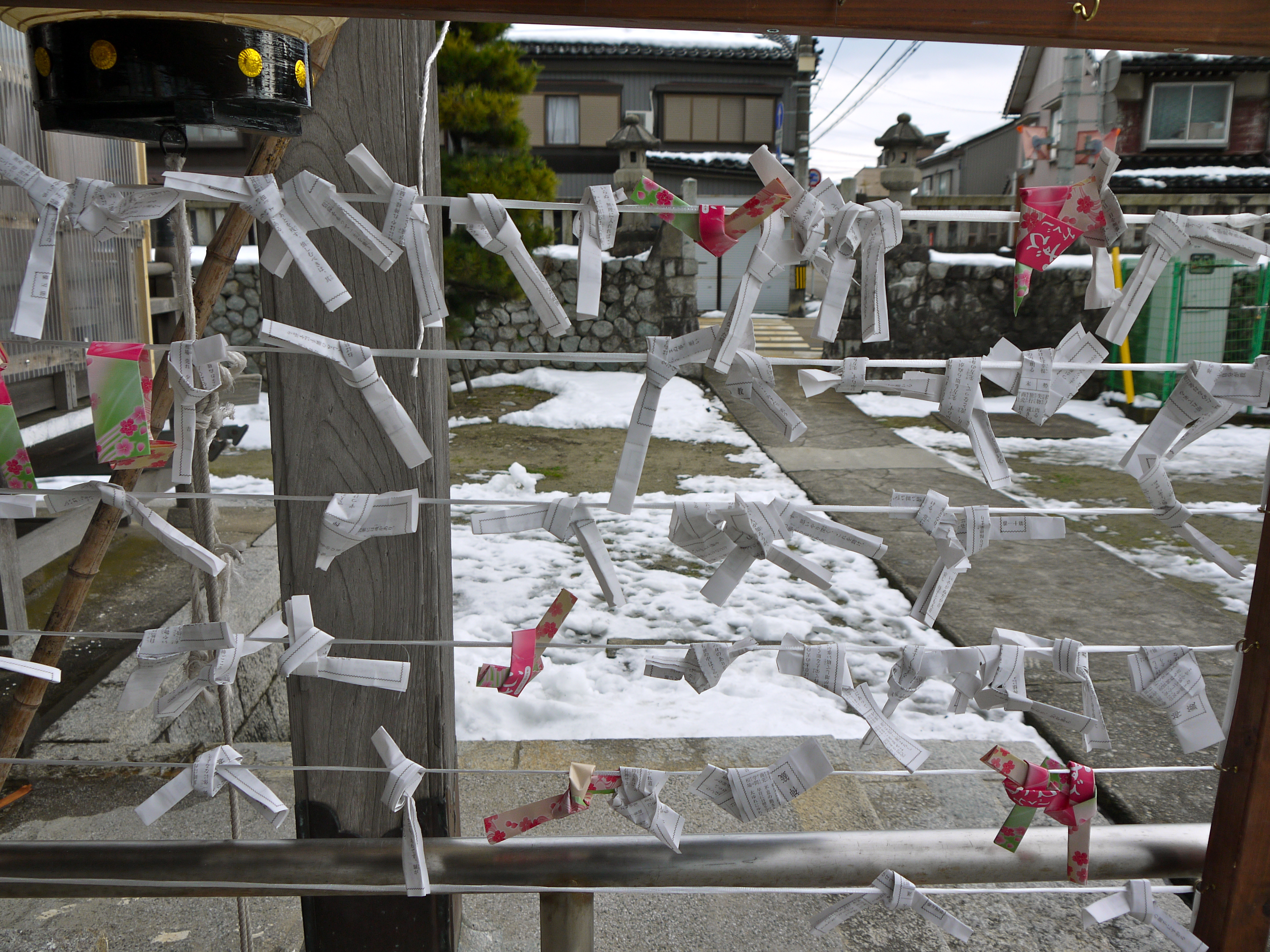
Omikuji (おみくじ), little strips of paper with fortunes written on them, at a Shinto shrine in Namerikawa
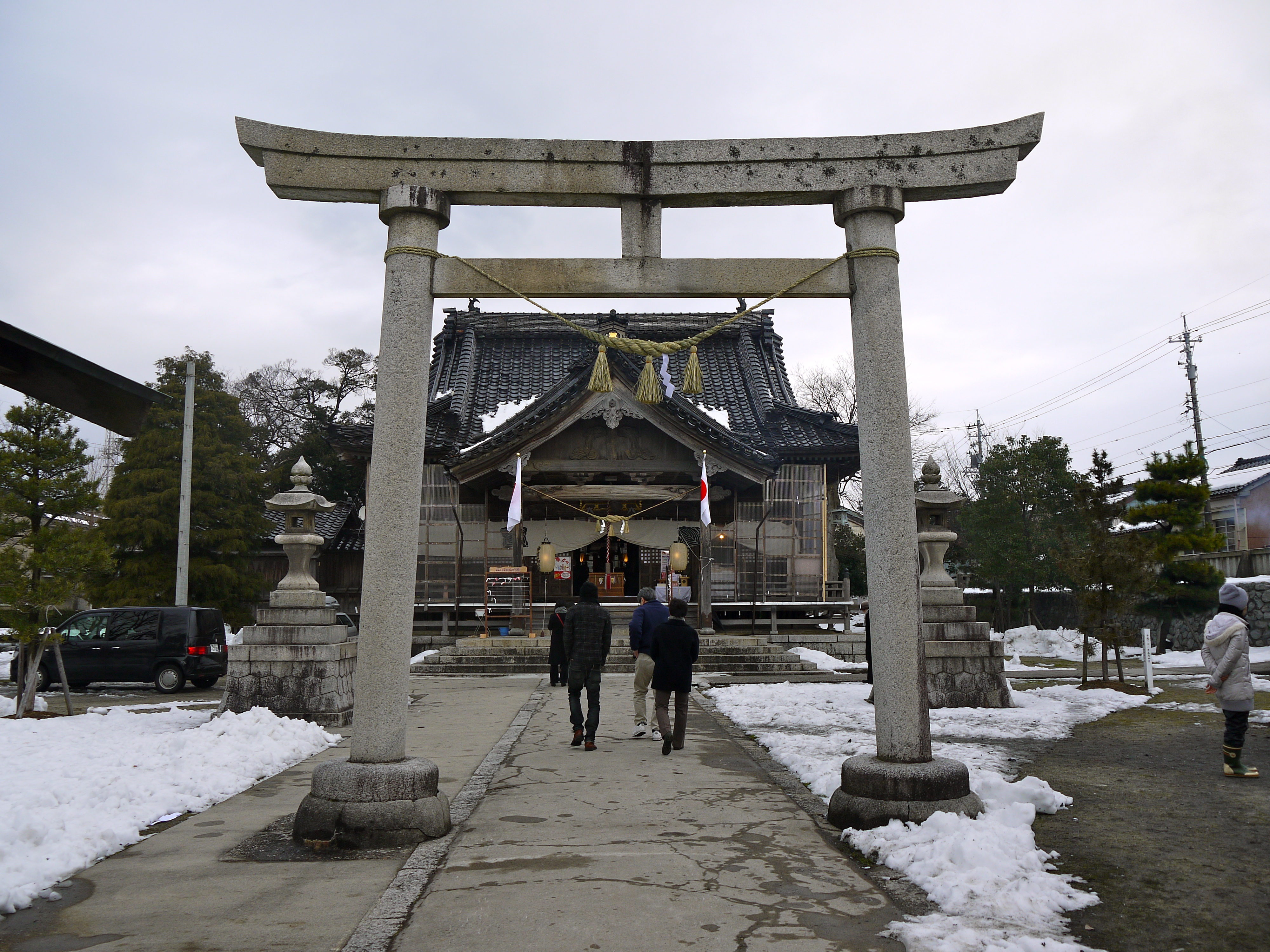
Shinto shrine in Namerikawa, Japan
Fukuoka’s Tsukurimon festival
Posted on November 5, 2011 Leave a Comment
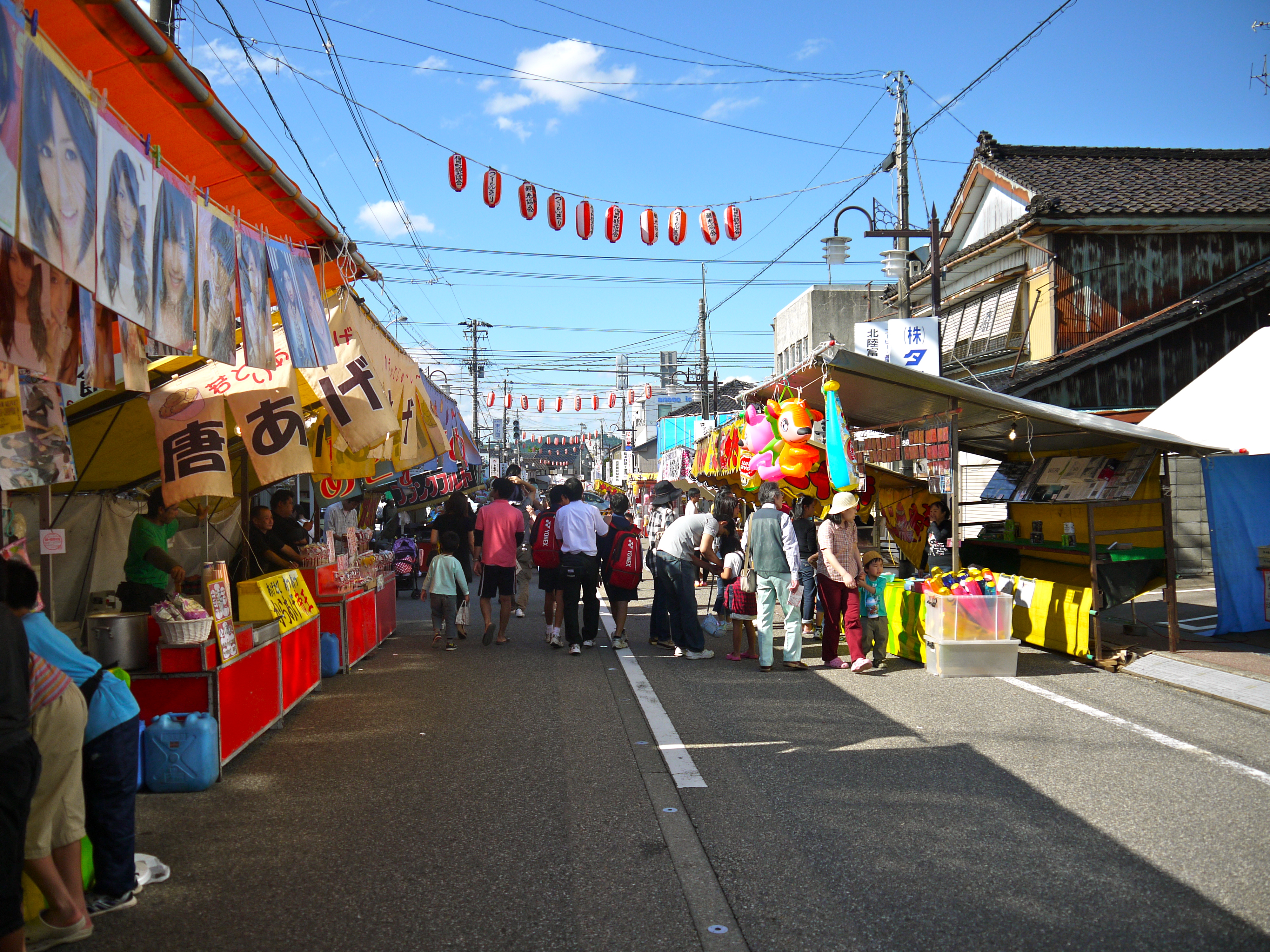
Fukuoka, Toyama Tsukurimon festival
One of the best parts of exploring a new culture and country is seeing things you never thought imaginable. I encountered this feeling of awe when I took the train to Fukuoka, Toyama in September to see the Tsukurimon festival, an event devoted to creating art out of produce. Here are some memorable pictures from the festival.
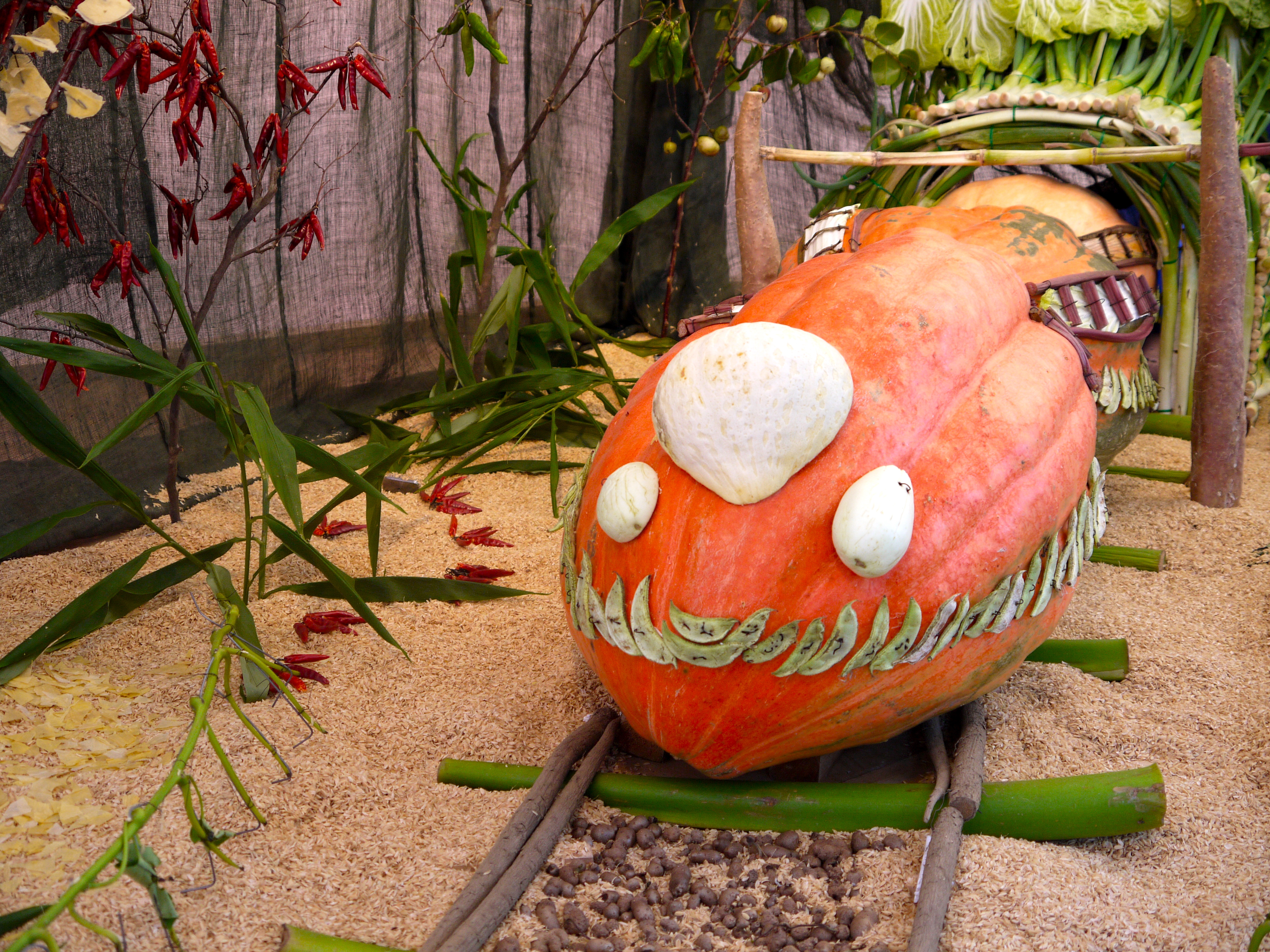
Vegetable cat bus ( ねこバス/nekobasu) from Totoro
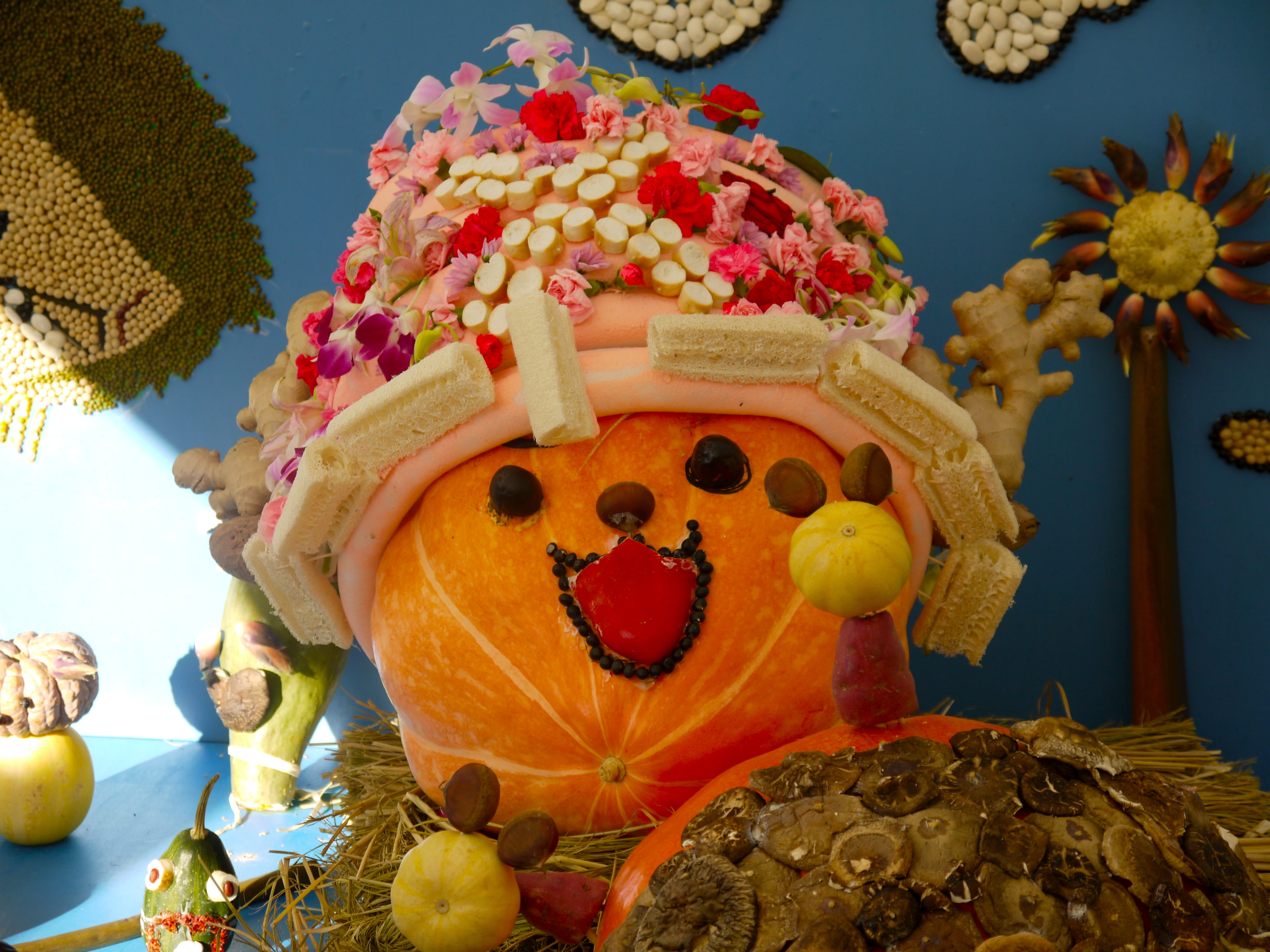
Vegetable Chopper (from the anime One Piece)

Vegetable dancers
Unexpected Cherry Blossoms
Posted on October 24, 2011 3 Comments

Life is full of the unexpected. Some surprises change your life for the better, while others are extremely painful.
All of us in the JET Programme have different reasons for wanting to live in Japan. Still, I am always surprised when I talk to someone who has dreamed of coming here since childhood. I often hear, “I’ve just always been fascinated with the culture.” Of course, I admire people who are interested in a culture with which they share no blood connection. That notion, however, is not something I understood until I entered my 20s.
I didn’t have a particular fascination with Japan, or any other Asian culture, as a child. My family celebrated its strong Irish roots, even though my siblings and I also share German and Czech blood. We went to Chicago’s famed Irish parades on St. Patrick’s Day, my Mom cooked Irish food and I studied the literature of the country. As a result, I always dreamed that Ireland would be the first country outside of the U.S. that I would visit. I assumed this would be on my honeymoon because that was the first time my parents traveled outside of the country.
But as I grew independent and traveled on my own, my worldview slowly changed. With the help of some scholarship money and my parents, I traveled to France on my first international voyage. Six months later, I left for an extended stay in Ireland, a country I still admire and feel a connection to.
But Japan is my home for the time being, and it is a country I love for many reasons. I will always feel a deep admiration for Japanese culture, even if I can never call myself Japanese.
When I visited Chicago in August, my Mom asked that I spend one afternoon organizing some books stored in our attic. I was taken aback when I saw the Japanese book (written in English) The Old Man Who Made the Trees Bloom, or as it is known in Japan, Hanasaka Jijii. The book was a gift to me and my twin sister Brigid from our parents. They bought it for us to commemorate our first visit to the Art Institue of Chicago. In this folktale, an old, poor couple in rural Japan grieve after their greedy neighbor kills their beloved dog Shiro. The kind and patient couple are rewarded, however, when the dog’s spirit brings them wealth in the form of gold and cherry blossoms. When I opened the book, I read this inscription from my parents:
July 6, 1991
To Sheila and Brigid,
I hope you enjoy this book. This was your first visit to the Art Institute of Chicago (July 6, 1991). Mom and Dad took both of you on the train. We ate in the Garden Restaurant.
Love,
Mom and Dad
Never in a million years did my seven-year-old self dream that one day, I would be living in the same country where this book is set.
Reading the book again 20 years later was a very happy surprise. Thank you, Mom and Dad.

Japan’s Owara Kaze no Bon Festival
Posted on October 22, 2011 Leave a Comment

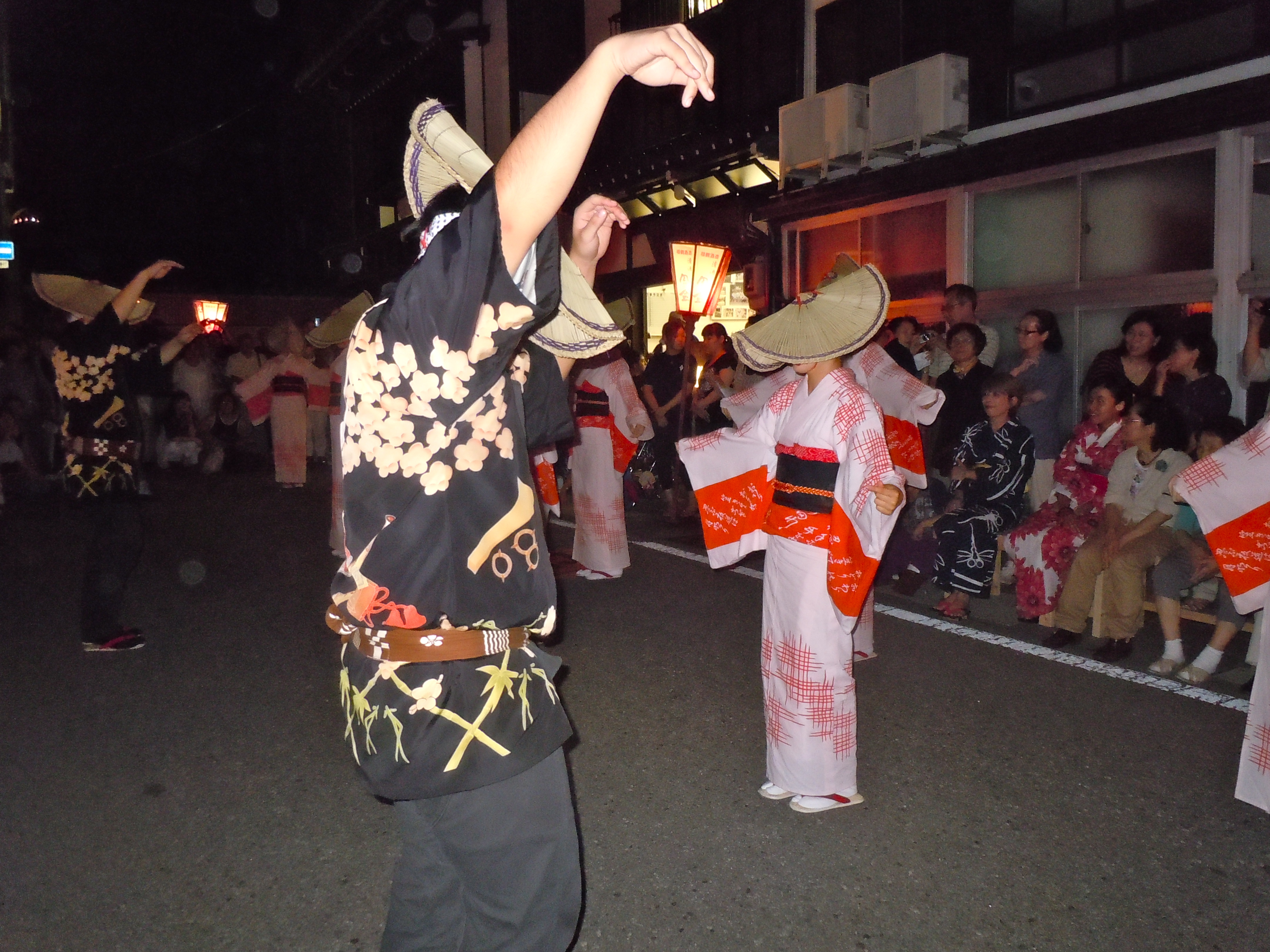
Owara Kaze no Bon Festival in Yatsuo, Toyama
The first Japanese festival I attended was the Owara Kaze no Bon Festival in the quiet mountain town of Yatsuo, in Toyama, Japan. Last September, I was still very new to Japan, and attending Owara was my first venture in Toyama alone. I was a little nervous but proud to be discovering a new country and culture. On a damp Friday evening, I took the train to Yatsuo and slowly strolled around the town, following the flow of the Jinzu River and admiring the beautifully-crafted paper lanterns that lit the streets with a delicate pink-orange hue. Everything about Yatsuo seemed traditional and tranquil. 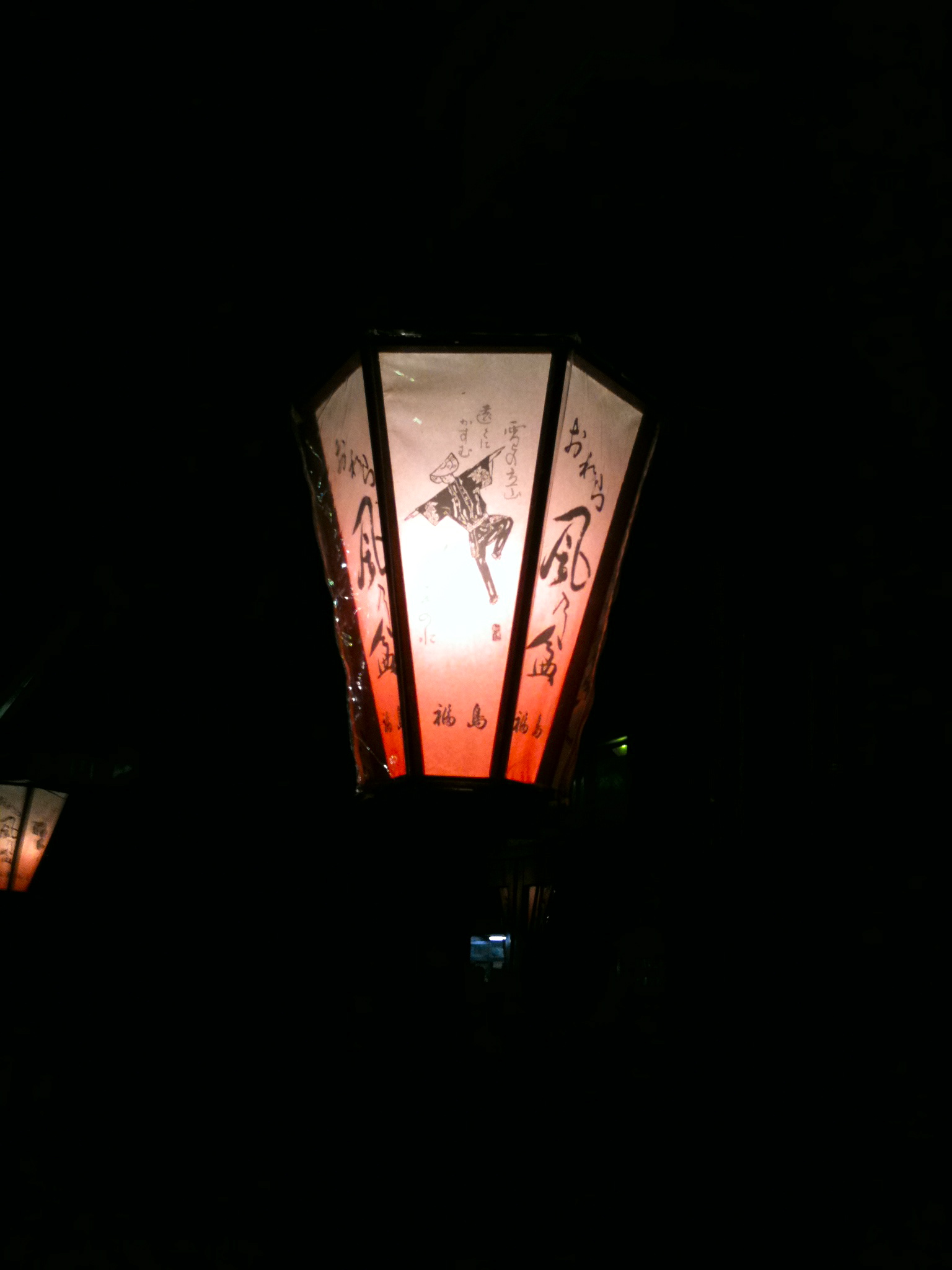
I ran into a few fellow Assistant Language Teachers (ALTs) and we walked to the main festival area together. Unlike most festivals in America, a center stage isn’t important for Owara because dancers perform at seemingly random points throughout the town – on small, scattered stages, in the street, and even on the porch of homes or stores. When reading a little bit more about the history Owara, I learned that it is one of Toyama’s most acclaimed festivals, and the dances that are performed symbolize a 300-year-old tradition of praying for good harvest of rice (and also to keep away typhoons).
This year, I attended the festival for the second time and was pleasantly moved by this tradition once again. I now seem to associate this special festival with independence and new beginnings. Some videos of the festival can be viewed on my Vimeo page. More videos of the festival from others can also be found on YouTube.
 Sheila Burt